
What Is Spirulina? Complete Nutritional Profile, Antioxidants & Daily Intake
Spirulina is a microscopic, spiral-shaped blue-green micro-alga (cyanobacteria) that has thrived on Earth for over 3.5 billion years. Recognized by the United Nations World Health Organization and NASA as one of the most nutrient-dense organisms on the planet, Spirulina platensis provides an extraordinary concentration of proteins, essential fatty acids, vitamins, and minerals.
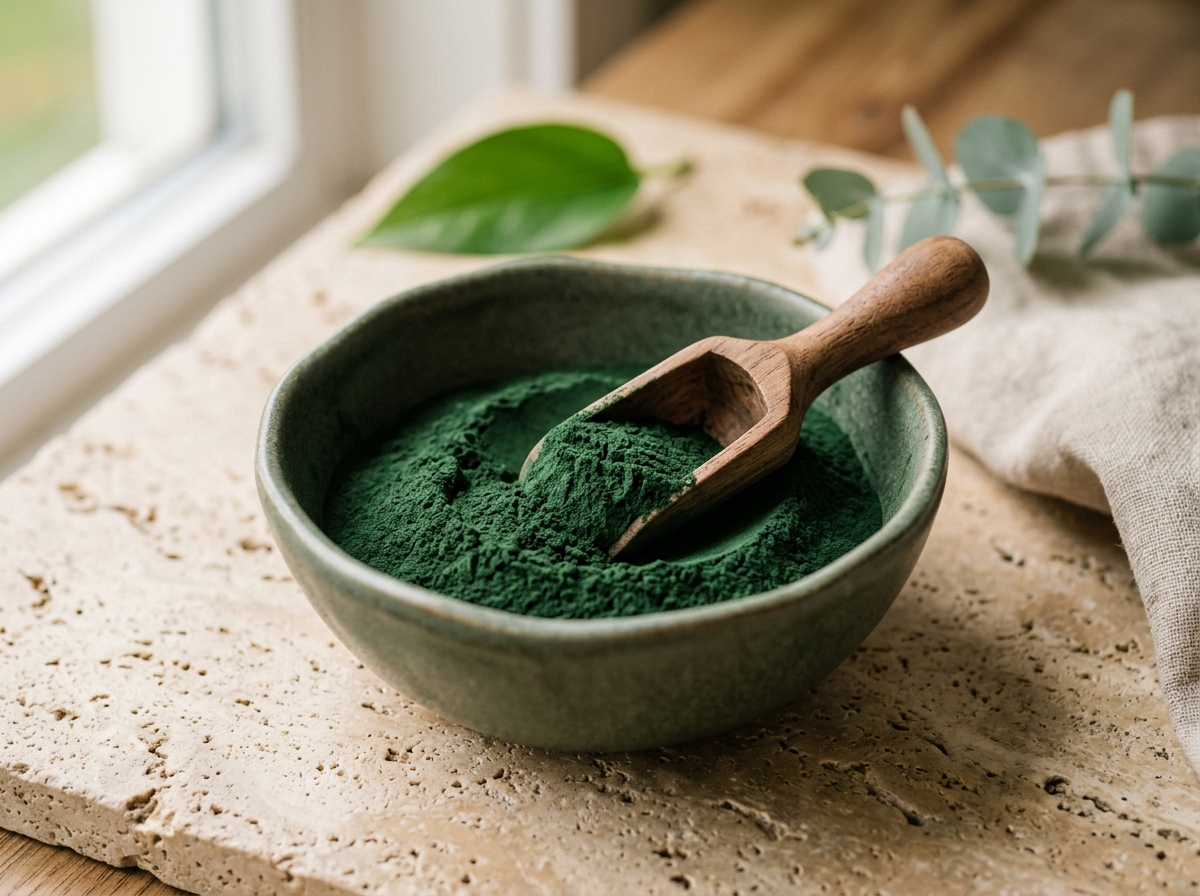
The Anatomy of a Micro-Algal Superfood
Unlike terrestrial plants with tough cellulose cell walls, spirulina possesses a fragile cell wall composed of mucopolysaccharides. This unique biological structure makes spirulina extraordinarily easy for the human digestive tract to break down and assimilate, offering up to 90% bioavailability of its constituent micronutrients.
In its natural dry form, spirulina contains approximately 60% to 70% complete protein, containing all essential amino acids in balanced ratios. It is also one of the rare non-animal sources of Gamma-Linolenic Acid (GLA), an essential omega-6 fatty acid known for supporting cardiovascular and cellular inflammation balance.
Key Micronutrients in Pure Spirulina
- C-Phycocyanin: The signature blue pigment-protein complex with documented free-radical scavenging and cellular protective properties.
- Beta-Carotene (Provitamin A): Exceptional concentrations that the human body converts to active Vitamin A for vision, skin health, and mucosal immunity.
- Plant Iron: Non-heme iron that is significantly more bioavailable than iron derived from spinach or standard green leafy vegetables.
- Chlorophyll-a: A green photosynthetic pigment that aids natural biological detoxification and cellular rejuvenation.
- B-Complex Vitamins: Including Thiamine (B1), Riboflavin (B2), and Niacin (B3) to support mitochondrial energy production.
Cultivation Standards: Why Water Quality Matters
Because micro-algae absorb minerals directly from their aquatic growing medium, the purity of spirulina depends entirely on the cultivation environment. Wild or poorly controlled open pond cultivation can accumulate airborne pollutants, industrial heavy metals, or toxic cyanotoxins like microcystins.
At Solenyx Farms, spirulina is cultivated in closed and carefully monitored raceway ponds using filtered deep-aquifer freshwater, certified food-grade nutrients, and controlled agitation. Every harvest undergoes stringent batch testing to ensure zero microbial pathogen contamination and non-detectable heavy metal levels.
Recommended Daily Serving Size
For general adult dietary supplementation, a daily intake of 3 grams to 5 grams (equivalent to 6 to 10 tablets of 500mg each, or one level teaspoon of powder) is standard. Beginners can start with 2 grams per day for the first week to allow the digestive tract to acclimatize before gradually increasing to the recommended level.
| Nutrient Component | Typical Concentration | Key Health Function |
|---|---|---|
| Crude Protein | 60.0g – 70.0g | Muscle repair, cellular renewal, enzyme production |
| C-Phycocyanin | 12.0g – 18.0g | Potent antioxidant & free radical scavenging |
| Total Dietary Fiber | 3.0g – 6.0g | Supports healthy gut microbiome activity |
| Gamma-Linolenic Acid (GLA) | 1,000mg – 1,400mg | Cellular membrane health & inflammatory balance |
| Iron (Fe) | 30mg – 50mg | Hemoglobin synthesis & oxygen transport |
| Beta-Carotene | 150mg – 250mg | Immune defense & antioxidant vision support |
| Chlorophyll-a | 1,000mg – 1,500mg | Natural cellular cleansing & vitality |
FSSAI Compliance & Regulatory Note
Spirulina is classified as a Health Supplement / Nutraceutical under FSSAI regulations. It is intended to complement a diversified balanced diet and should not be used as a replacement for conventional medical treatment or balanced meals.
Have Questions or Need a Custom Spirulina Quote?
Get in touch directly with our farm specialists for retail product guidance, lab test reports, or bulk wholesale pricing.
Scientific Sources & Regulatory References
- Habib, M. A. et al. (2008). A Review on Culture, Production and Use of Spirulina as Food for Humans and Feeds for Domestic Animals and Fish. FAO Fisheries and Aquaculture Circular No. 1034.
- Dillon, J. C. et al. (1995). Nutritional value of the alga Spirulina. World Review of Nutrition and Dietetics, 77, 32-46.
- Karkos, P. D. et al. (2011). Spirulina in clinical practice: evidence-based human applications. Evidence-Based Complementary and Alternative Medicine, 2011, 531053.
Disclaimer: This article is published for educational and nutritional information purposes only. Statements have not been evaluated as pharmaceutical cures by medical drug authorities. Always consult a qualified physician or healthcare professional before making dietary changes.